API
An API (American Petroleum Institute) oil-water separator is a specialized piece of equipment used in the oil and gas industry and various other industrial oil treatment applications to separate oil and other hydrocarbons from water. The primary purpose of an API oil-water separator is to efficiently remove oil and suspended solids from wastewater streams, ensuring compliance with environmental regulations and preventing oil-contaminated water from being discharged into the environment. The API Separator is used to remove only free-floating oil which has globule sizes of 150 microns and above.
The separator operates on the principle of gravity separation, taking advantage of the differences in density between oil and water. It consists of a large tank, usually civil constructed tank, with internal baffles and compartments designed to slow down the flow of water, allowing oil droplets to rise to the surface and be skimmed off, while the clarified water is discharged from the bottom.
Key components and features of an API oil-water separator include:
Inlet Section
Wastewater flows smoothly into the separator to enable initial mixing and gravity settling of heavy solids.
Internal Baffles
Internal baffles and plates optimize fluid patterns and extend residence time for maximum separation.
Oil Skimmer
Employs floating weir or paddle systems to efficiently collect and remove accumulated surface oil.
Sludge Chamber
Heavy contaminants settle at the bottom base for organized collection and periodic removal.
Outlet Section
Clarified water is collected from lower zones for further treatment or safe environmental discharge.
Applications

Oil Refineries

Dairy

Tanneries
TPI / CPI
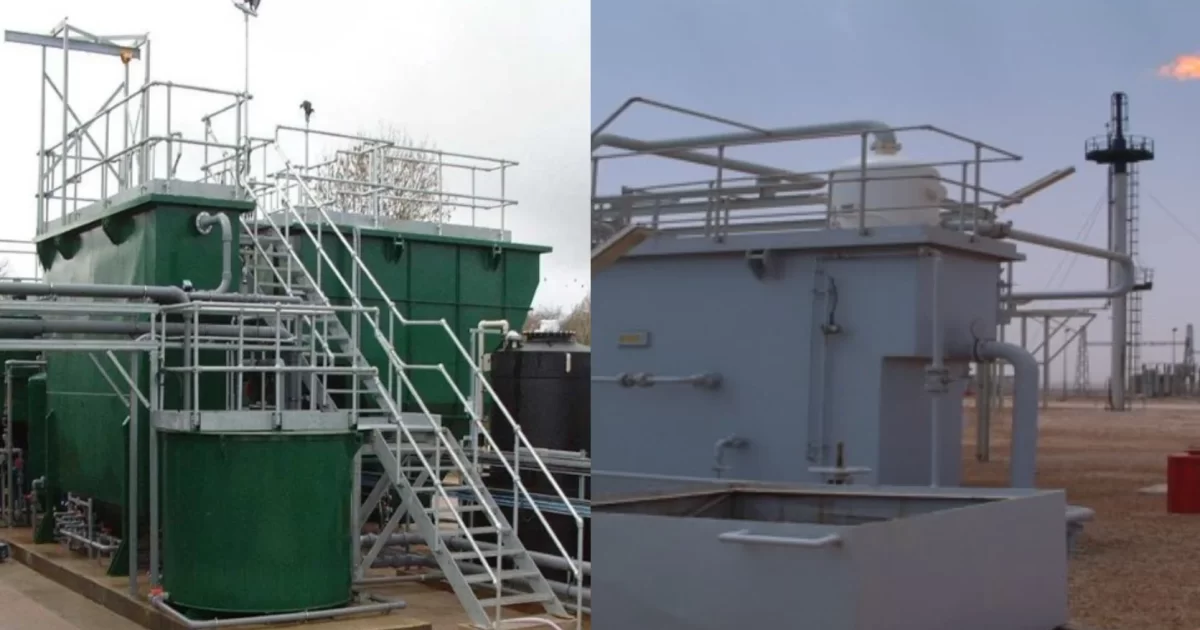
Kroftas Tilted Plate Interceptor (TPI) is used for oil-water separation in wastewater treatment and industrial applications. TPIs are designed to efficiently remove free floating oil from water by employing a combination of gravity separation and coalescence.

