CONVENTIONAL CLARIFIER
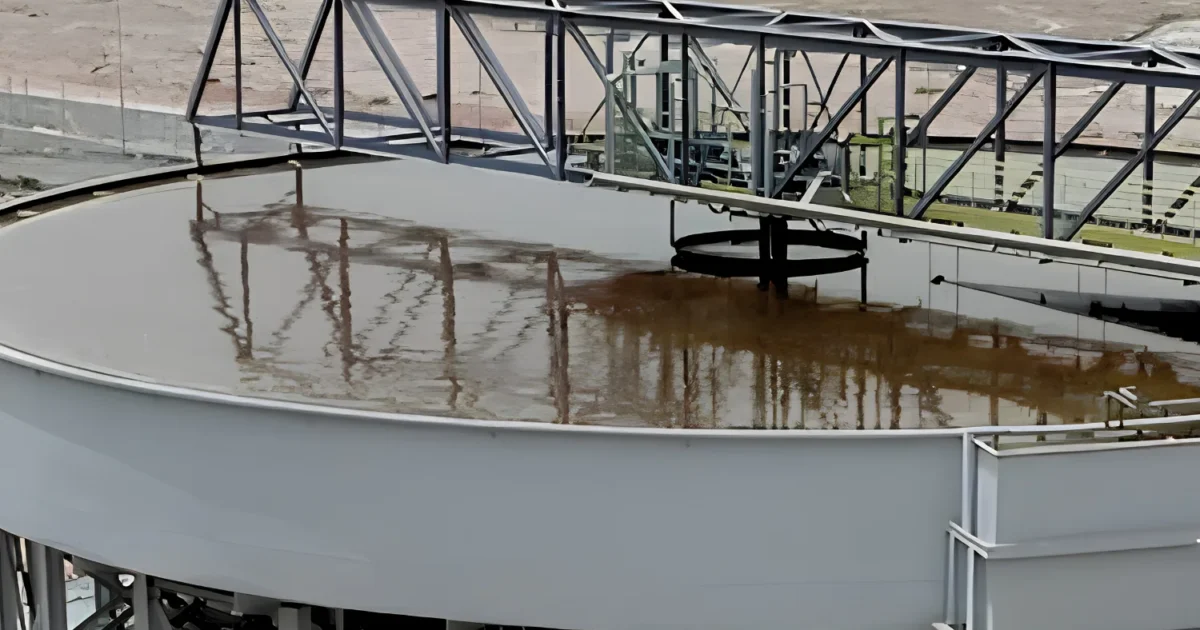
Krofta offers central driven and peripheral driven Conventional Clarifiers, part of our full range of clarifier solutions, used to remove solid particles and impurities from water. It operates on the principle of gravity settling, where solid particles settle down in a quiescent (motionless) zone, allowing clean water to separate and rise to the surface.
Here's how a conventional clarifier typically works:
Inflow of Water
Water containing suspended solids and impurities enters the clarifier tank through an inlet. This incoming water is often referred to as influent.
Quiescent Zone
Inside the clarifier, the velocity of the influent is significantly reduced, allowing the water to come to a state of calm or quiescence. Solid particles begin to settle.
Settling Zone
The settled particles gradually sink to the bottom of the clarifier tank due to their weight. The settling time depends on size, weight, and water dynamics.
Sludge Collection
The settled particles accumulate as sludge at the bottom of the clarifier. This sludge is composed of various organic matter, minerals, and suspended impurities.
Sludge Removal
To prevent the buildup of excessive sludge, a mechanism is employed to remove it from the bottom of the tank using a bottom-mounted scraper arm.
Overflow Weir
Clarified water nears the surface and flows over a peripheral weir or baffle, which stops fine particles from escaping with the clear water layout.
Effluent Collection
The clarified water that flows over the weir is collected cleanly in a launder and directly routed for downstream treatment processes or final distribution.
Popular Applications
Municipal sewage treatment plants
Industrial effluent treatment plants
Common effluent treatment plants
Other Clarifiers