If you've come across the term while researching wastewater treatment options for your plant, this guide breaks down exactly how DAF systems work, why they're so effective, and where they're used—in plain, practical terms.
What Is Dissolved Air Flotation?
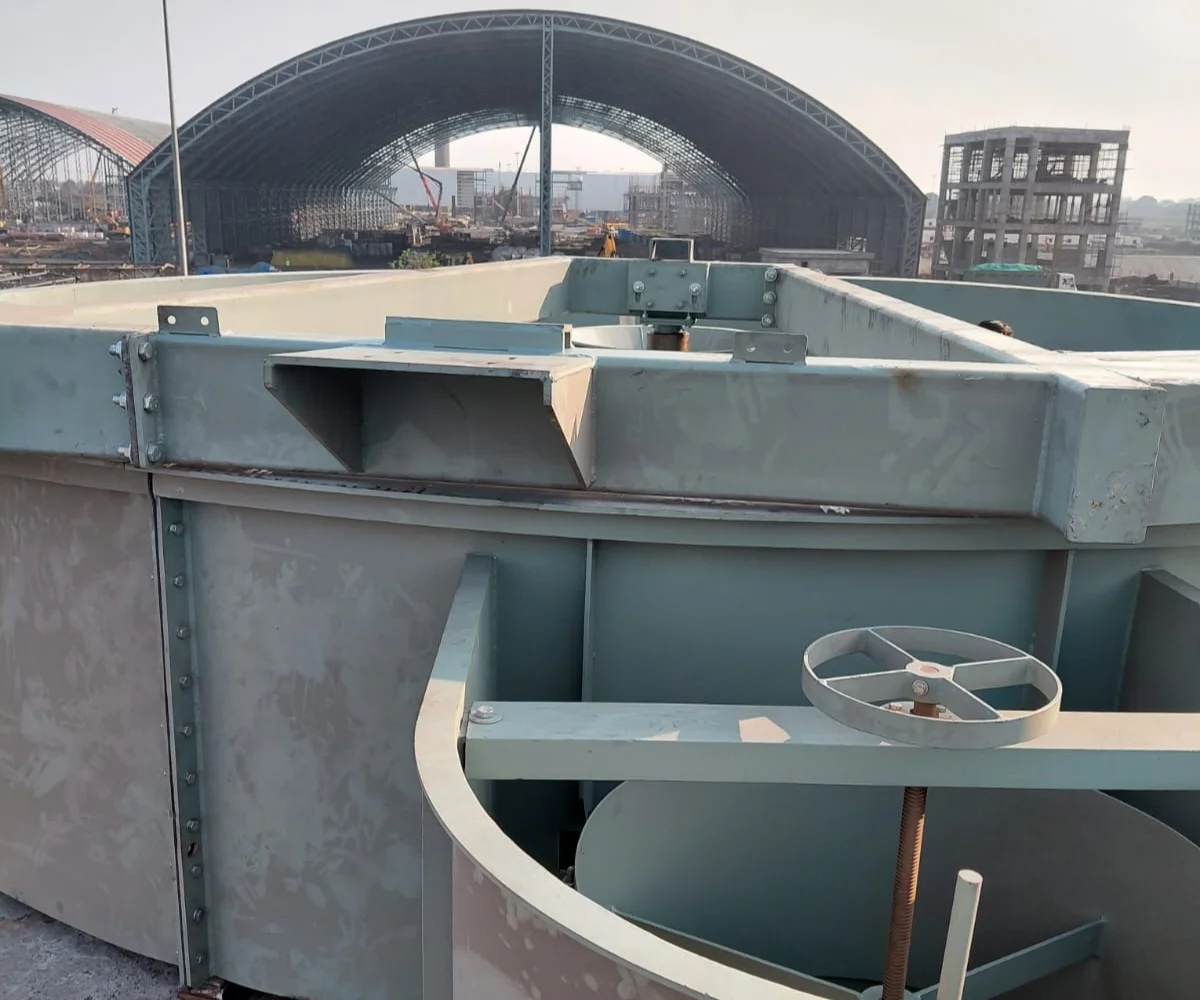
Dissolved Air Flotation is a water treatment process that removes suspended solids, oils, and greases from water by dissolving air into the water under pressure, then releasing it at atmospheric pressure in a flotation tank. The released air forms tiny microbubbles that attach to suspended particles, causing them to float to the surface—where they're skimmed off as sludge, leaving clarified water behind.
It's essentially the opposite of sedimentation (where heavy particles sink)—in DAF, light, air-attached particles rise instead.
The DAF Process, Step by Step
Pressurization
A portion of clarified water is recycled and saturated with air under pressure (typically 40–70 psi) in a retention tank.
Release and Microbubble Formation
This pressurized, air-saturated water is released into the flotation tank through a specially designed valve, dropping to atmospheric pressure. This causes the dissolved air to come out of solution as extremely fine microbubbles (typically 10–100 microns).
Bubble-Particle Attachment
These microbubbles attach to suspended solids, oil droplets, and grease particles in the incoming wastewater.
Flotation
The bubble-particle combination is lighter than water, so it rises rapidly to the surface, forming a concentrated float layer (sludge).
Skimming & Clarified Water Discharge
A mechanical skimmer continuously removes the floated sludge layer from the surface, while clarified water exits from the bottom or middle of the tank for further treatment, reuse, or discharge.
Why Use DAF Instead of Other Separation Methods?
Common Industries That Use DAF Systems
- Food processing and dairy plants (fats, oils, and grease removal)
- Petrochemical and refinery wastewater (oil-water separation)
- Textile and paper industries (dye and fiber recovery/removal)
- Automotive and metal processing (oil and coolant separation)
- Municipal and industrial effluent treatment plants (ETP) as a primary or pre-treatment stage
Choosing the Right DAF System for Your Plant
DAF systems vary significantly in design, capacity, and efficiency depending on your wastewater characteristics—flow rate, contaminant load, and required effluent quality all factor into system sizing.
Looking for technical specifications, sizing parameters, or custom equipment configurations for your industrial facility?
Explore DAF Systems →An experienced DAF supplier in India should be able to assess your specific wastewater profile and recommend the right configuration rather than a one-size-fits-all unit.
Why Choose Krofta for Your DAF System
Krofta Engineering has been designing and manufacturing water and wastewater treatment equipment since 1983, with ISO 9001:2015 certification and installations across 51+ locations globally. Our DAF systems are engineered for industrial-scale reliability, backed by decades of application experience across food processing, petrochemical, textile, and effluent treatment sectors.
Explore our full range of wastewater treatment solutions or contact our engineering team for a consultation.